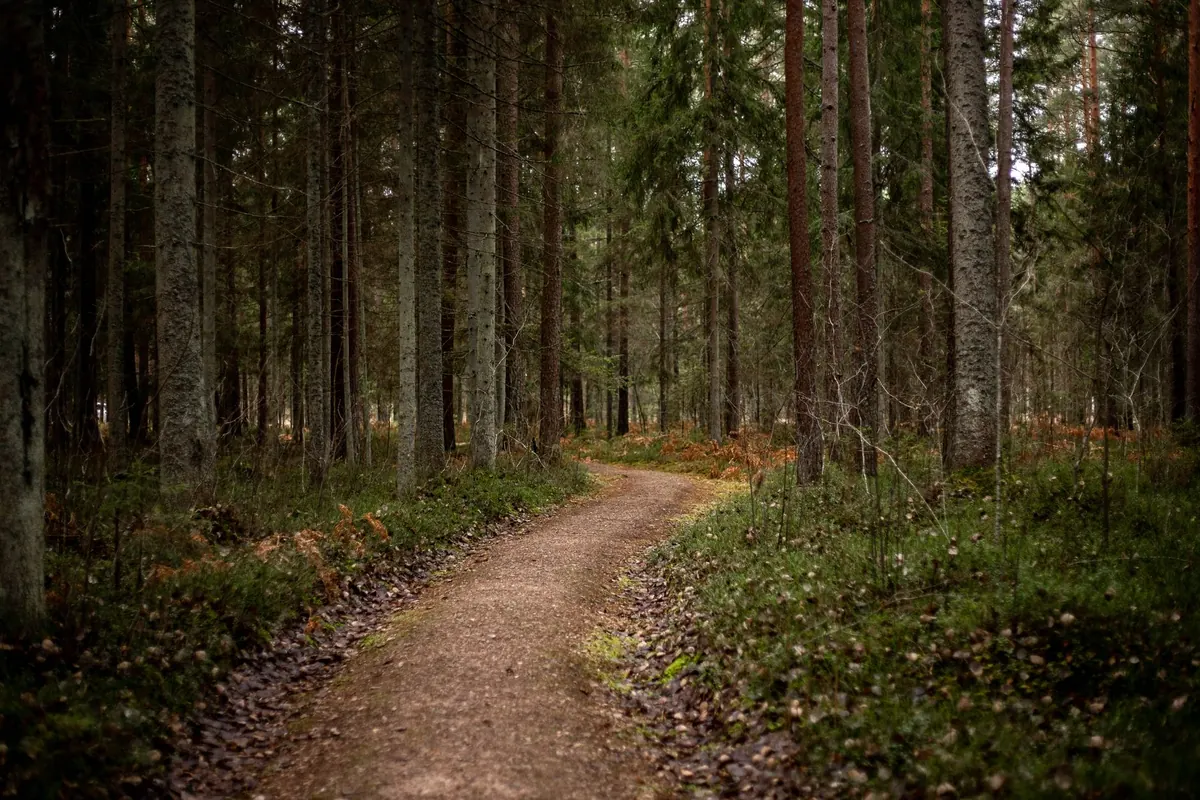
Stand at a field gate in the Chilterns and you might look at a huddle of beech on the slope and call it a wood. The person beside you calls it a grove. A third, who keeps bees, calls it a copse and asks whether anyone still cuts it. All three of you are describing the same thirty trees, but the words carry different histories — and they point to different ways of looking after the ground beneath.
None of these terms is a legal category in the UK, and nobody will fine you for mixing them up. They are still useful, though. Each one tells you something about who planted the trees, why they are there, and what is likely to happen to them next.
What Makes a Grove?
A grove is a small group of trees with open ground beneath it and light coming through the canopy. That is the whole of the definition, and it is deliberately loose. Three limes on a village green can be a grove. So can two acres of walnut planted in a grid. The word has been in English since Old English grāf, meaning a small wood or thicket, and it survives in place names — Grove, Groveley, Grove End — and in the Victorian habit of naming a new street after the orchard it was built on.
What separates a grove from a wood is less about the number of trees than about the light. In a grove, the crowns do not knit together. Wind moves through at head height. Grass grows, and someone usually cuts it. There is often a reason for the planting that you can guess at: a view to frame, a bench to shade, a memorial to mark, a drive to line.
Groves also tend to be even-aged. When a landowner plants a clump in one winter, the trees rise together and eventually decline together, which is why so many old groves look oddly uniform — a ring of limes all hollowing at once.
Grove or Orchard?
An orchard is fruit trees grown for a crop. That is the difference in one line, and it holds up surprisingly well in the field.
A traditional orchard — the kind still found in Herefordshire, Somerset, Devon and Kent — is widely spaced standard trees over grazed or mown grass, often with wildflowers underneath and mistletoe in the branches. For a fortnight in May it looks exactly like a grove, and if the trees are old and the harvest has been abandoned, most people would simply call it one. The tell is purpose. If somebody picks the fruit, presses it, sells it or gives it away, it is an orchard.
A grove can absolutely contain fruit trees. A walnut grove, a cherry grove, a quince grove: all fine. But the trees are there for shade, for nuts in passing, for the look of the thing — not for a crop that has to be gathered and accounted for.
Copse, Coppice and the Cut
Copse and coppice are the same word, from the Old French copeiz, a thicket that has been cut. A copse is a small wood managed by cutting stems back to the stump on a rotation. Hazel is the classic, cut roughly every seven to fifteen years for hurdles, beanpoles and thatching spars; sweet chestnut in Kent and Sussex was cut for fencing and hop poles.
This matters when you are trying to identify what you are standing in, because a copse changes shape dramatically through its cycle. In the first year after cutting, the ground is open, the light floods in and it reads like a grove. By year ten it is a dense, dark thicket. Left uncut since the middle of the last century, as thousands have been, it turns into something leggy and hollow, with multi-stemmed stools at the base — the clearest evidence of its past.
Woodland, Wood and Forest
Woodland has a working definition: in the UK it generally means at least half a hectare — about 1.2 acres — with a minimum of 20% canopy cover, or the potential to reach it. Below that, people reach for copse, grove or simply "the trees".
Canopy closure is the thing you can actually see. In a wood, the crowns touch and the floor is shaded, sheltered and humid, with leaf litter and a woodland microclimate. In a grove, sunlight reaches the grass and the wind gets in.
Forest is a different animal altogether. The word came to Britain with the Normans as a legal term for a royal hunting ground, which might be open moorland, heath or farmland. The New Forest is still largely open grazing land. It is not simply a large wood.
Groves You Will Meet in Britain
- Churchyard and cemetery groves. Yews, limes and rings of trees planted when the building or burial ground was laid out, often older than the headstones around them.
- Avenue remnants. Lines of lime, beech or horse chestnut planted to frame a drive. When disease or storms take most of them, what survives reads as a grove.
- Orchard-groves. Traditional cider orchards in the west, cherry orchards in Kent, grown old and unharvested and quietly reclassified by everyone who walks past.
- School and hospital grounds. A single species, evenly spaced, mown beneath, planted for shade and shelter a century ago.
- Parkland clumps. Widely spaced oaks in a deer park, grazed underneath, which are as close as Britain gets to the classical idea of a grove.
- Hangers and hillside clumps. Beech on chalk slopes in the Chilterns and Hampshire, holding on where the plough could not reach.
Reading the Difference on a Walk
If you want to work out what you are looking at in thirty seconds, run through this in order:
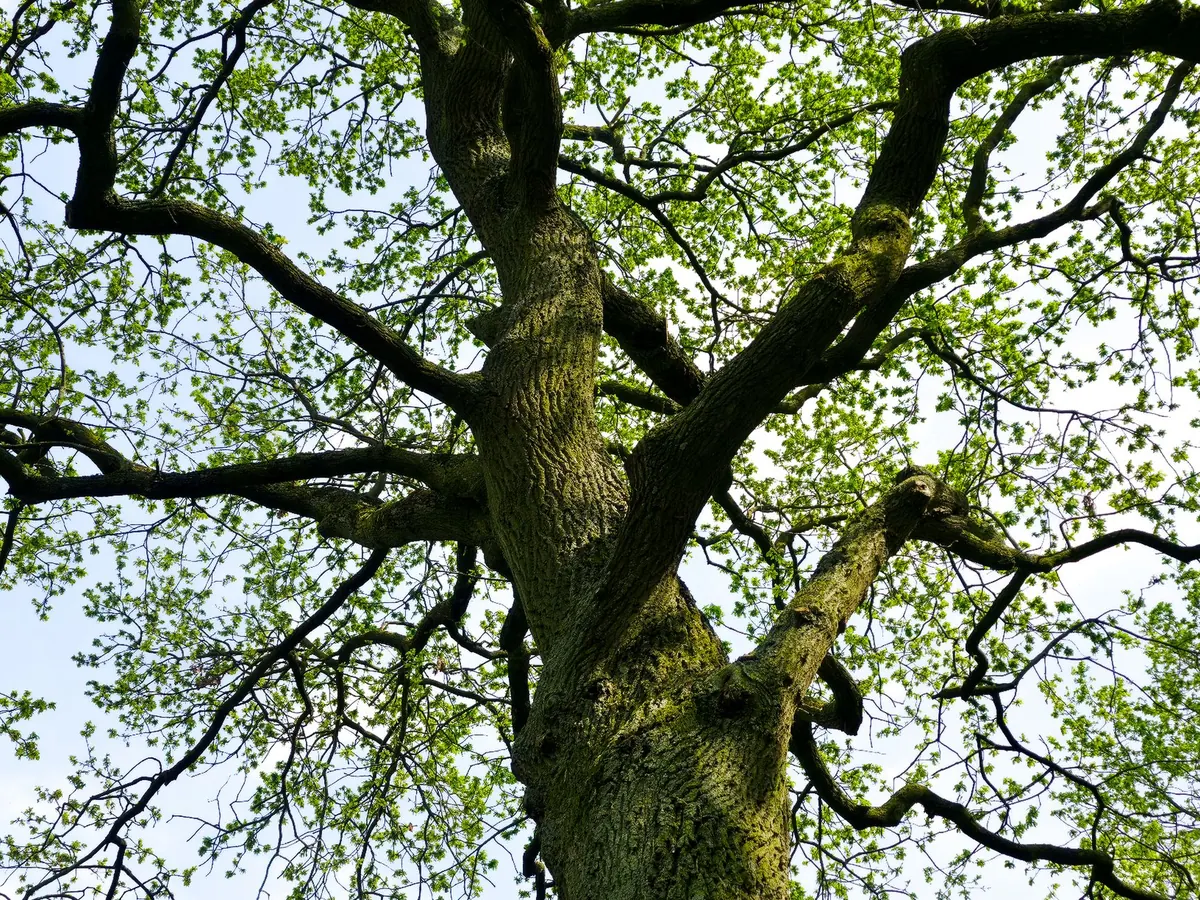
- Look up. Do the crowns touch? Knitted canopy means wood. Patches of sky mean grove.
- Look down. Mown grass, grazed turf or a mown path suggests grove or old orchard. Deep leaf litter and bare shade suggests woodland.
- Look at the base of the trunks. Single clean stems mean planting. Multi-stemmed stools mean old coppice.
- Check the spacing and ages. Trees of similar age, evenly spaced, were planted together — usually in one winter.
- Look for purpose. Benches, gates, a memorial stone, a path straight through the middle.
- Read the map. Names such as Grove Farm, The Groves or Grove Road often preserve a clump that has since gone.
Planting a Grove of Your Own
Three to seven trees is plenty for a garden, and it will look more like a grove than twenty cramped into the same space. The mistake almost everyone makes is planting close and planning to thin later. Thinning is hard work, and most people never do it. Plant instead at the spacing you want in forty years: six to ten metres apart for medium trees such as field maple, hornbeam, rowan or crab apple. An oak wants closer to fifteen metres if it is ever to spread properly, so choose smaller species on a small plot.
Bare-root trees go in between November and March while they are dormant, which is cheaper and establishes better than potted stock. Dig a square hole, keep the root flare at ground level, firm the soil, mulch a metre-wide ring and water well through the first two summers. Leave the ground beneath open rather than paving up to the trunks; mown grass with a mown path through it is the classic grove treatment, and a patch left long in summer will bring in insects and birds. Early bulbs — snowdrops, daffodils, cyclamen — will settle in under the canopy and give you something to look at before the leaves arrive.
One practical note before you start cutting. If the trees are in a conservation area, or carry a tree preservation order, or stand on a boundary you share with a neighbour, check with your local planning authority and take proper advice before pruning or felling. It is a short conversation that saves a long one.
Photo: Ilze Luīze Pauliņa / Pexels