A British park day can turn on a sixpence. You leave the house in sunshine, eat your sandwiches under a grey sky, and walk back to the car in drizzle while someone complains about wet socks. None of that has to ruin the day, provided the bag was packed for it. What follows is the list worth running through before you go: clothing that copes with a forecast which keeps changing its mind, food that survives a rucksack, a few games to fill the gaps between the swings and the ice cream van, and the small safety items you hope you will never need. Pack most of it the night before, keep it in one bag by the door, and the morning becomes a matter of shoes and out.
Clothing That Handles Four Seasons Before Lunch
Layer rather than guess. A cotton T-shirt, a light fleece and a thin waterproof shell per person will handle more weather than one thick coat, because children add and shed layers constantly. A packable cagoule takes up almost no room and weighs less than a bottle of water.
Feet deserve the most thought. Wellies are ideal after rain, but for a long walk across a country park they rub; sturdy trainers with grip are usually the better bet, with wellies in the boot as backup. Whatever you choose, pack a spare pair of socks per child. Dry feet rescue an afternoon faster than anything else on this list.
Small extras worth carrying
- Sun hats and a tube of sun cream, even when the sky is white — British UV gets through cloud in late spring and summer.
- A light long-sleeved top for wooded trails and early evenings, when midges and mosquitoes arrive.
- A thin towel or two, for wet slides, muddy hands and paddling-pool incidents.
- One full change of clothes for the youngest, kept in a plastic bag.
Food, Drink and the Snack Rotation
Children eat more at a park than they do at home, because running about is hungry work. Bring refillable water bottles for everyone — most parks with a visitor centre have a tap, and knowing that saves you carrying litres around all day. A flask of tea or squash is a small luxury when the wind picks up.
Choose snacks that survive being sat on: oatcakes, apples, malt loaf, cheese portions, nuts if your family has no allergies to consider, and a bag of something sweet for the walk back. Avoid chocolate on warm days unless you enjoy a melted mess, and avoid anything crumbly that will end up in the picnic rug.
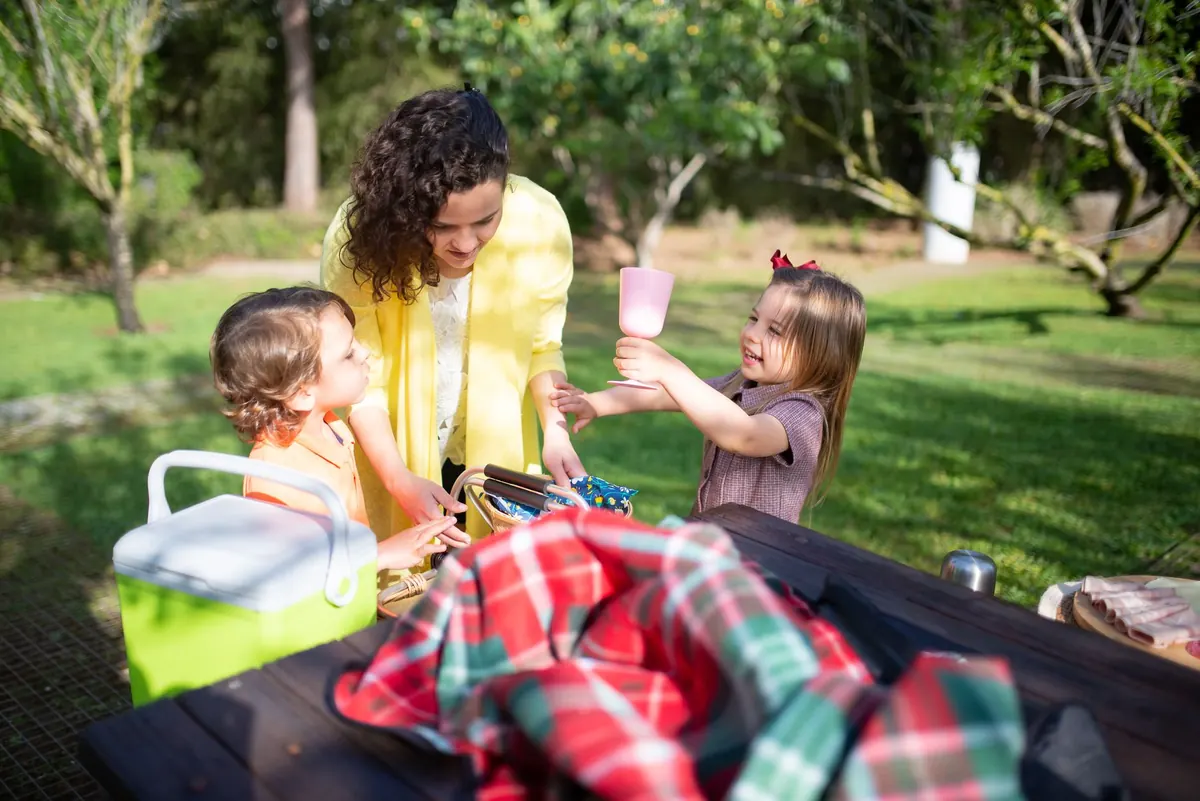
If you are planning a proper picnic, keep it simple: sandwiches made in the morning, a tub of something cold, and a rubbish bag tied to the outside of the rucksack. Take everything home with you, including fruit peel, and leave the spot as you found it. If anyone in the group has a food allergy, tell the children which foods are off limits before the bags are opened, and keep a separate container for their portion.
Base Camp: Rug, Shelter and One Good Bag
A lightweight picnic rug, a spare carrier bag and a small groundsheet transform a patch of grass into somewhere you can settle for an hour. If there is any chance of rain, a compact tarpaulin or a pop-up shelter earns its place in the boot, particularly if you are meeting other families and want to sit rather than stand around looking at the clouds.
Pack in one bag with sections, not five. One rucksack that everyone knows holds the food, and a second smaller one with clothes, games and the first-aid pouch, means you can leave half the kit in the car if the weather turns or the children decide they would rather go home. Label the water bottles if you are going with other families; the arguments over whose is whose are remarkably tedious.
Games and Boredom Insurance
The playground will occupy them for a while. It rarely occupies them all day. Bring two or three things that need very little setting up and can be played by a mixed age group:
- A soft ball or frisbee — works for throwing games, catch and simple target practice.
- A skipping rope, which doubles as a limbo line.
- Chalk for hopscotch on a path, if the park permits it.
- A kite, on the sort of breezy day that makes a picnic awkward anyway.
- Playing cards or a small travel game for the inevitable sit-down.
- A bucket, net and magnifying pot for pond-dipping and bug hunting.
Resist the urge to bring the whole toy box. A child faced with a bag of eleven things plays with none of them and asks to go home. Two or three options, plus the swings and a walk to find conkers or pine cones, is plenty.
Safety and the Small Stuff
A small pouch of plasters, antiseptic wipes, a pair of tweezers for splinters and a rolled bandage covers most park mishaps. If your family already uses antihistamine cream or tablets, take them; before buying anything new for a child, ask a pharmacist to check what is suitable and follow the age guidance on the packet. For anything beyond a scrape or a sting, seek proper medical advice rather than relying on a rucksack.
Before the children disappear towards the climbing frame, agree a meeting point and a time to check in. If you are somewhere busy, take a quick photo of each child in the morning showing what they are wearing — it is far more useful than trying to remember at three in the afternoon. For younger children, write your mobile number on a wristband or the inside of their arm.
Other practical bits: a fully charged phone, a small power bank, hand gel, tissues, and enough cash or a card for parking, which is where park days quietly get expensive. Note the closing time of the car park and any gates that lock in the evening.
The Night-Before Routine
Ten minutes the evening before saves half an hour of shouting in the morning. Run through this in order:
- Check the forecast, then pack layers rather than one heavy coat.
- Fill water bottles and put them in the fridge.
- Make sandwiches or at least assemble the snacks into one tub.
- Put the rug, games and first-aid pouch in the main bag.
- Leave shoes and wellies by the door, and charge the phone.
- Tell everyone what time you are leaving, and mean it.
Making the Day Work Once You Are There
Arrive earlier than you think you need to. Car parks at popular parks fill by mid-morning on a sunny weekend, and an early start means you claim a bench, a bit of shade and a quiet hour before the crowds arrive.
Set up base camp first, then explore. That way the bags are not being carried around all day and there is somewhere to return to when someone is tired, hungry or has fallen in a puddle. Keep the day loose: a walk, a play, food, a game, and home before the overtired stage sets in. Aim to leave while everyone is still having a good time. That is what gets the whole family out again the following weekend.
Photo: Kampus Production / Pexels