A single street tree is a good thing. Half a dozen of them, planted close enough that their branches meet and their roots share the same patch of ground, is something better. These small clusters turn up in the unglamorous corners of towns and cities: the wide end of a verge, a cut-through beside a car park, the edge of a school field, a churchyard nobody quite maintains. They are modest, they are cheap, and they do a surprising amount of work.
What Counts as an Urban Grove?
A grove isn't a plantation or a formal avenue. It's a group of roughly three to a dozen trees growing close enough to affect each other: canopies closing, roots sharing the same soil, leaf litter building up in one place rather than being scattered along a street. Think of the scruffy triangle where two roads meet, a pocket park behind a row of shops, an amenity strip beside a block of flats.
Size matters less than grouping. Six mature limes and a dozen young whips do the same jobs on different timescales, provided the planting is dense enough that the trees shade each other's roots and slow the wind between them.
Cleaner Air, Leaf by Leaf
Trees improve air in a few ordinary ways. Leaves and needles catch dust and particles on their surfaces, which rain then washes to the ground. A canopy slows the wind, so grit and exhaust particles settle instead of swirling. Gases are taken up through the leaves as the tree breathes. Evergreens keep working through the winter when deciduous trees are bare.
Be realistic about the limits. A grove does not cancel out traffic emissions, and planting trees is no excuse for more cars on a residential street. But where a cluster sits between a busy road and the places people live, walk and play, it genuinely intercepts some of what passes through. Density helps: one continuous canopy filters more than the same number of trees scattered along a pavement.
Shade, Cooling and the Ground Beneath
Trees cool in two ways. Shade blocks sunlight before it reaches the surface, and transpiration releases water vapour as leaves breathe, which takes heat out of the air around them. The combined effect is most obvious on paving and asphalt, which otherwise store heat through the day and release it into the evening.
That has practical value. A bench under a grove gets used in July; the same bench in full sun sits empty. A walk to the shops with a stretch of tree cover is a different experience from one across open tarmac. Deciduous trees drop their leaves, so winter sun still reaches south-facing windows and footpaths.
Where the shade is worth most
- Along the route people already walk — the school run, the path to the bus stop, the cut-through to the shops.
- Beside seating: a bench, a play area edge, a picnic table, a community garden.
- Against west-facing walls and windows, where afternoon sun builds the most heat.
If you are planning time outdoors during a hot spell, and especially if you have a heart or breathing condition, take advice from a health professional — shade helps, but it is not a substitute for water and avoiding the hottest part of the day.
A Place for Wildlife to Land
A group of trees offers more habitat than a single tree because it has layers, and layers suit different creatures. Within one small grove you can find:
- Canopy: nesting space for tits, blackbirds and finches, plus the caterpillars and aphids that feed their chicks.
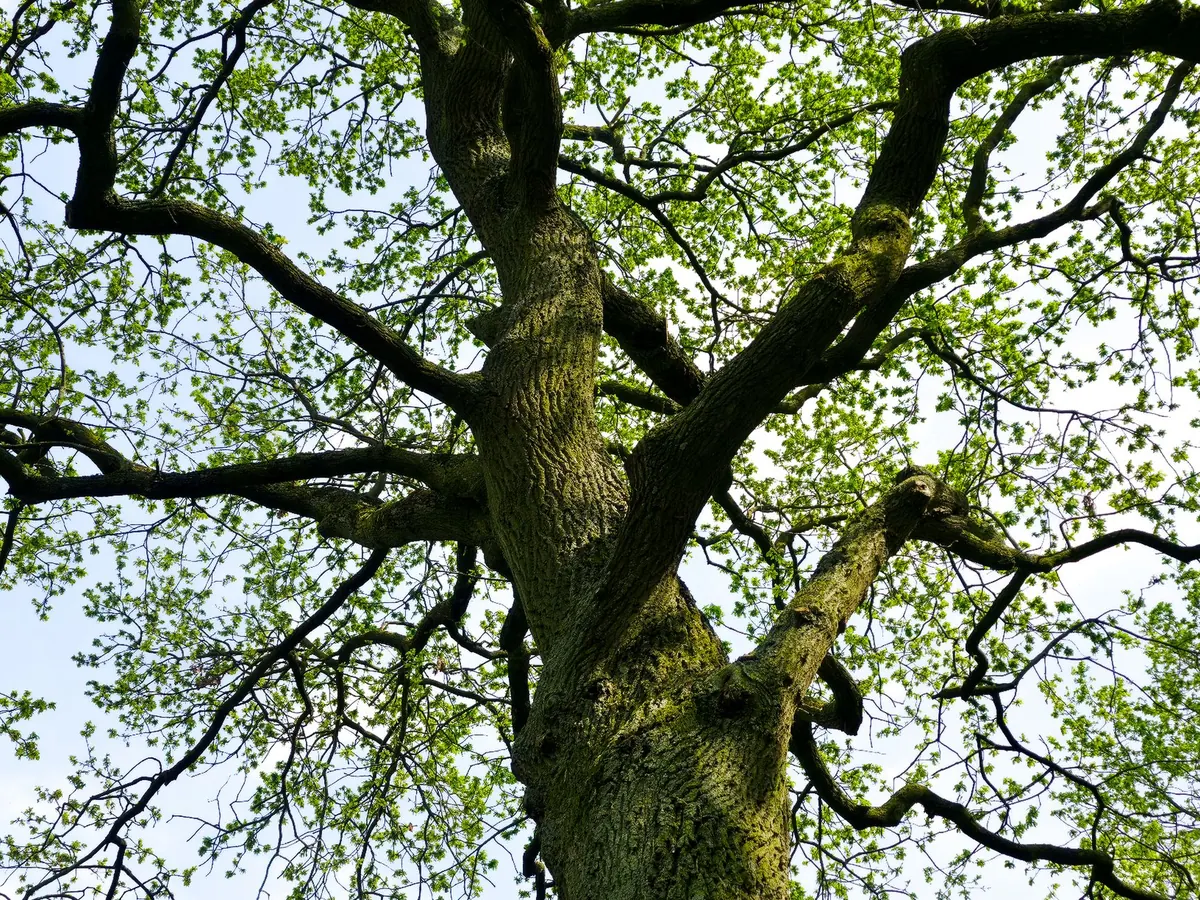
- Bark and trunks: crevices for insects and spiders, roosting spots for bats, and surfaces for lichens and mosses.
- Blossom and catkins: early pollen and nectar for bees at a time of year when little else is open.
- Berries and seeds: rowan, hawthorn and crab apple carry thrushes and finches into winter.
- Leaf litter and roots: damp cover for beetles, frogs and, if you are lucky, hedgehogs.
- Deadwood: fungi and beetles break it down slowly, feeding the soil beneath.
Location matters as much as species. A grove near a garden, a hedgerow or a park becomes a stepping stone, letting birds and insects cross a street or an estate that would otherwise be a blank gap. Native species such as oak, birch, willow, hawthorn, hazel, field maple and lime tend to support more insects than ornamentals, but a mixed planting of any kind beats a row of identical trees.
The Wellbeing Effect
Ask people why they like a particular patch of trees and the answers are usually small and specific: it is cooler there, the birds are loud, the leaves sound good in the wind, there is somewhere to sit out of the sun. Those things add up. A grove gives a street a landmark and a reason to pause, and a bench beneath it tends to collect the same faces day after day.
There is a quieter benefit too. Ground that is looked after signals that somebody is paying attention to the neighbourhood, and that tends to spread. The strongest effects come from groves on routes people already use — no special trip required.
Why a Group Beats a Single Tree
Planting in clusters is not just a matter of convenience. It is more resilient: if one tree succumbs to disease, storm damage or old age, the canopy is still there and the gap closes over. It is also better for the trees themselves. Inside a grove, wind speeds drop, humidity rises and temperature swings are gentler, which is close to the conditions young trees grow best in.
A group also reads as a place rather than a feature, and it is cheaper to look after: one mulch bed to weed, one watering round, one set of guards. The one thing to watch is competition. Plant too tightly for the mature size of the species and the weaker trees will sulk and stall. Space them for the trees they will become, not the saplings you buy.
Getting a Grove Going Where You Live
- Find the spot. Look for ground that is mown but never used: a wide verge, an unused corner of a park, the back of a car park, an amenity strip beside flats, a school field edge.
- Check who manages it. Council highways, the parks team, a housing association, a parish council, a church or a private owner. A call to the council's tree officer is usually the quickest way in.
- Ask about planting schemes. Many councils run winter planting programmes with approved species, and residents' groups or friends-of-parks groups can often apply for a small site.
- Match trees to the space. Think about mature height and spread, shade cast, and what lies underground — pipes, cables, drains. If you are unsure, ask the utility company before you dig.
- Plant in the dormant season. Bare-root trees go in between late autumn and early spring, when the ground is workable but not frozen. Water thoroughly for the first two or three years and mulch to hold moisture.
- Protect the trunks. A guard against strimmers, rabbits or deer saves more young trees than almost anything else.
- Give people a reason to stay. A bench, a path, a bit of clearance underneath. A grove that gets used is a grove that gets defended.
The most valuable urban grove is usually the one you can reach in five minutes without crossing a dual carriageway.
If planting is not possible this year, look after what is already there. Pick the litter out of the leaf litter, water a struggling young tree in a dry spell, and tell your council when a group of trees matters to you. Better still, go and sit under one. Twenty minutes beneath a canopy on a warm afternoon is not a wasted twenty minutes.
Photo: framepersecC / Pixabay